Automate HVAC inspections.
Free technicians to fix real problems.

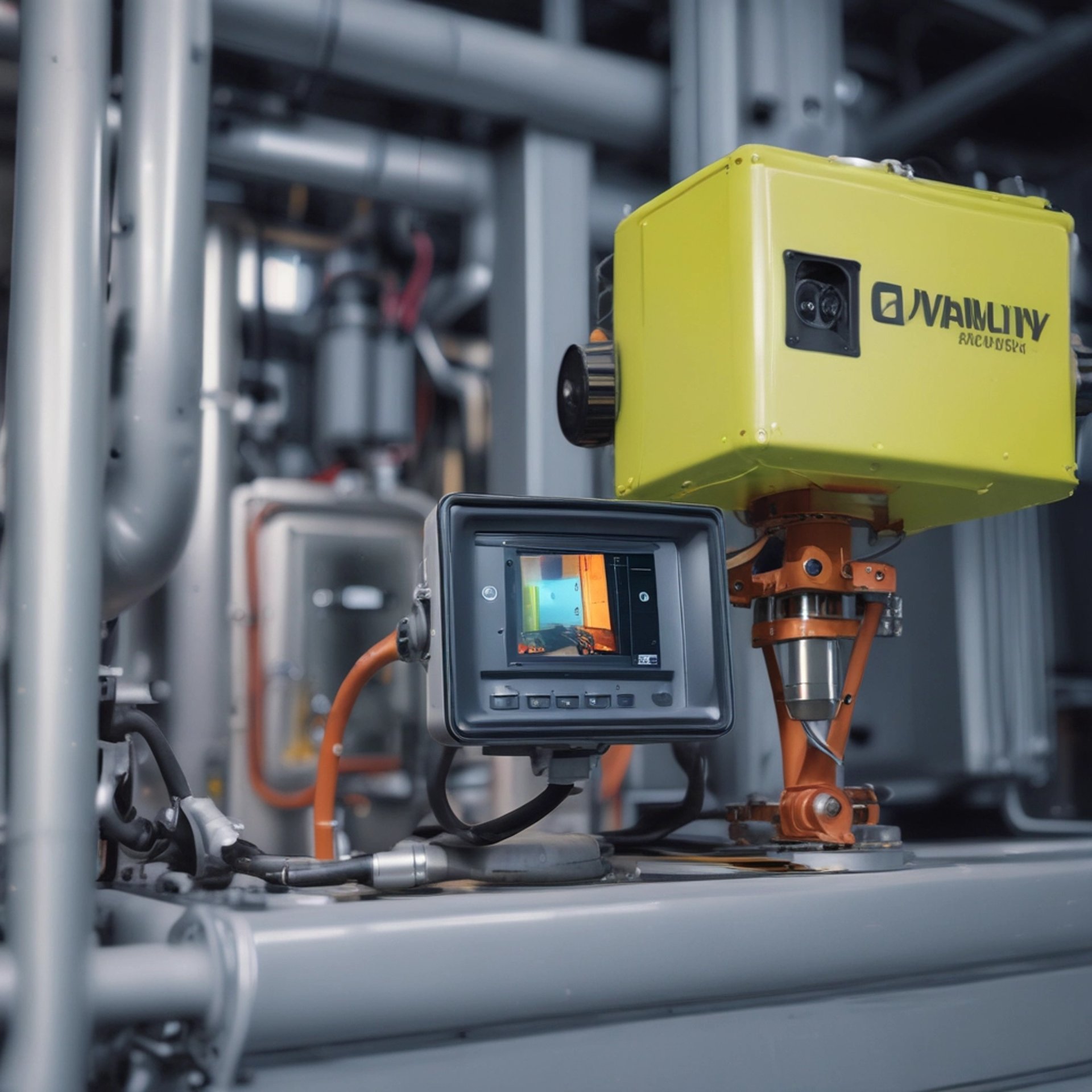
How Humanoids Save Time, Cost & Reduce Rework
Humanoids save time and cost by performing the same inspections technicians already do — but more consistently, more frequently, and with complete documentation.
By automating the work that consumes skilled time every shift
In large facilities, HVAC inspections still depend on technicians walking long routes, visually checking equipment, and writing reports by hand. These inspections are required for safety, audits, and reliability—but they take hours every shift and repeat every day.
Humanoids take over this repetitive inspection work. They walk predefined routes, capture visual and thermal evidence, read visible gauges, and automatically generate inspection reports. This removes the need for technicians to spend time walking and documenting, while keeping inspection quality consistent across every shift.
By reducing inspection effort, facilities recover 1.5 to 3 hours per technician per shift. That time is typically reinvested into troubleshooting, maintenance, and system reliability rather than additional hiring or overtime.
Manual inspection labor in large facilities often costs between 2-3x more annually than a humanoid inspection assistant, which includes operation and maintenance. The result is lower inspection cost, fewer overtime hours, and reduced reliance on contractors—without reducing headcount.
The result is consistent inspections, lower operating cost, and better use of skilled technicians—every day, across every shift.
1.5–3 hrs saved per shift
Proven Results
24/7 inspection coverage
Trusted Globally
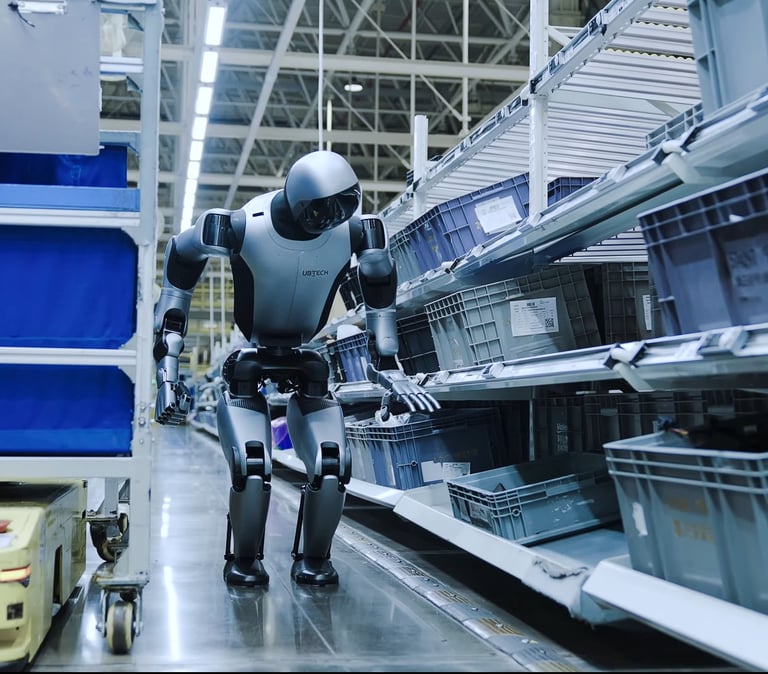
Types of Inspections Performed
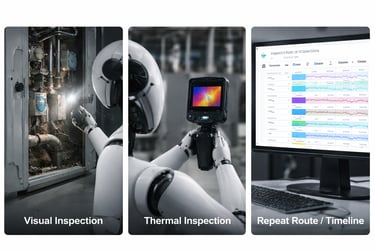
Large data centers and Bitcoin mining facilities rely on a combination of visual checks, thermal observations, and repeat inspections over time to maintain safe and reliable HVAC operations. Most issues do not appear suddenly. They develop gradually due to dust buildup, airflow degradation, blocked intakes, moisture, or equipment wear.
By combining visual, thermal, and frequent inspections, facilities catch developing issues earlier, reduce repeat troubleshooting, and avoid emergency work. This lowers overtime, rework, and downtime — without changing staffing or control systems.
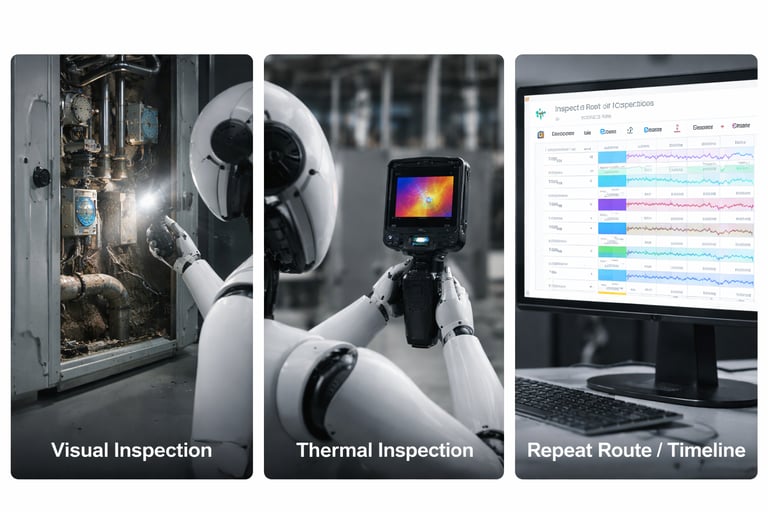
Thermal Inspections
Frequency-Based Inspections
Visual Inspections
Detect dust buildup, blocked airflow, leaks, condensation, and physical damage
Capture consistent visual evidence every shift
Reduce missed issues caused by rushed or skipped checks
Identify abnormal heat patterns and imbalances
Reveal airflow and cooling issues not visible to the eye
Support earlier investigation before alarms trigger
Perform the same inspections at the same frequency, every day and every shift
Track gradual changes over time through repeat observations
Reduce rework caused by late discovery of developing issues
"Earlier visibility comes from consistency and repetition, not autonomous decision-making."
See how this saves time and cost
Projects (Coming Soon)
Real-world HVAC inspections made efficient.


Data Centers
Routine inspections with detailed thermal imaging.


Mining Sites
Consistent pressure checks in challenging environments.


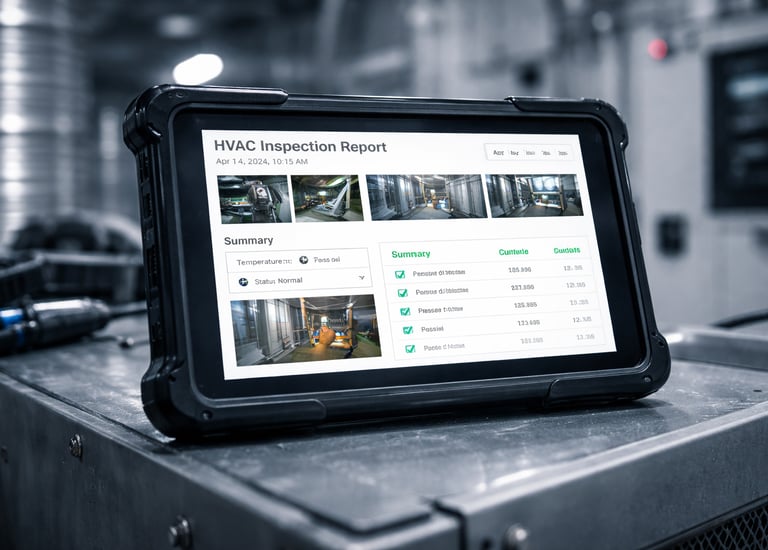
Photo Capture
Visual records for accurate documentation.
Reporting
Instant reports to streamline team workflows.